
A Beloved Start to the Season
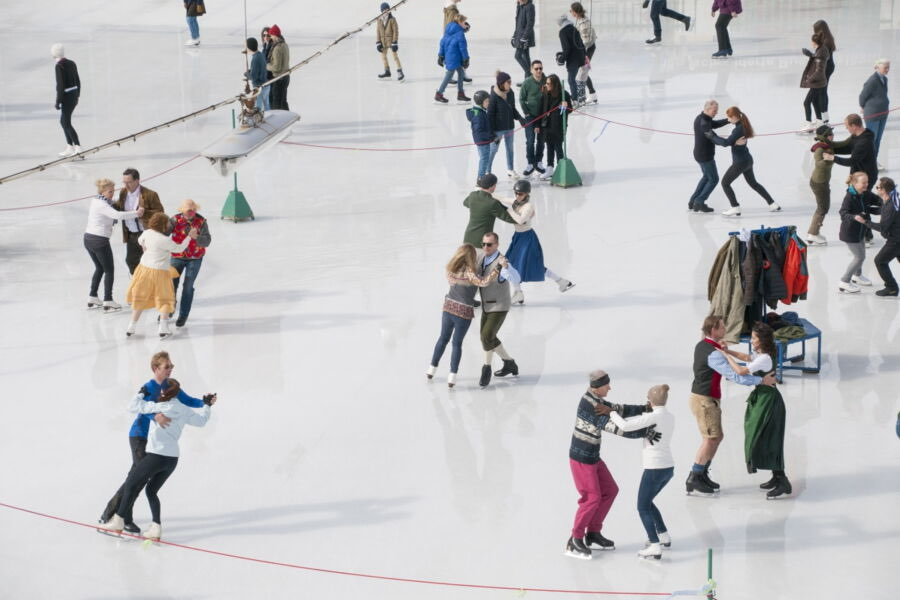
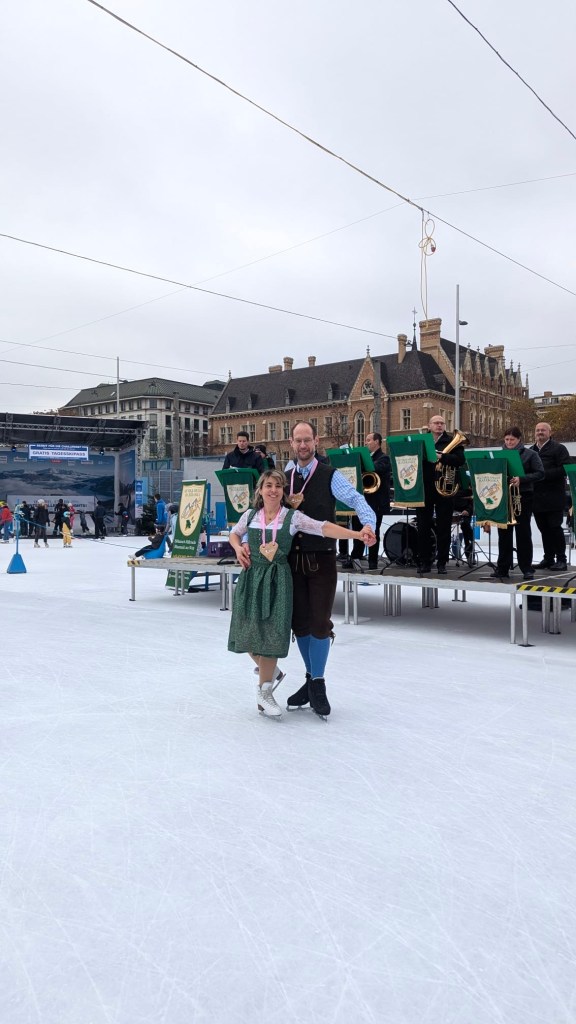
Ice dance lovers in Vienna (Austria) were looking forward to this weekend all summer. We slipped into our “Dirndl” or “Lederhose” to celebrate the start of the skating season with our beloved “Rundtanzen”.
What is “Rundtanzen”?
“Rundtanzen” roughly translates into English as “circular dancing”. It is the original and traditional Viennese form of ice dancing. During Rundtanz sessions, we dance to waltz, marches, tango and polka, as well as modern music. It is not a competitive sport and has no fixed rules — the steps can be freely adapted to the rhythm of the music. It’s all about having fun dancing, enjoying the crisp winter air and meeting friends.
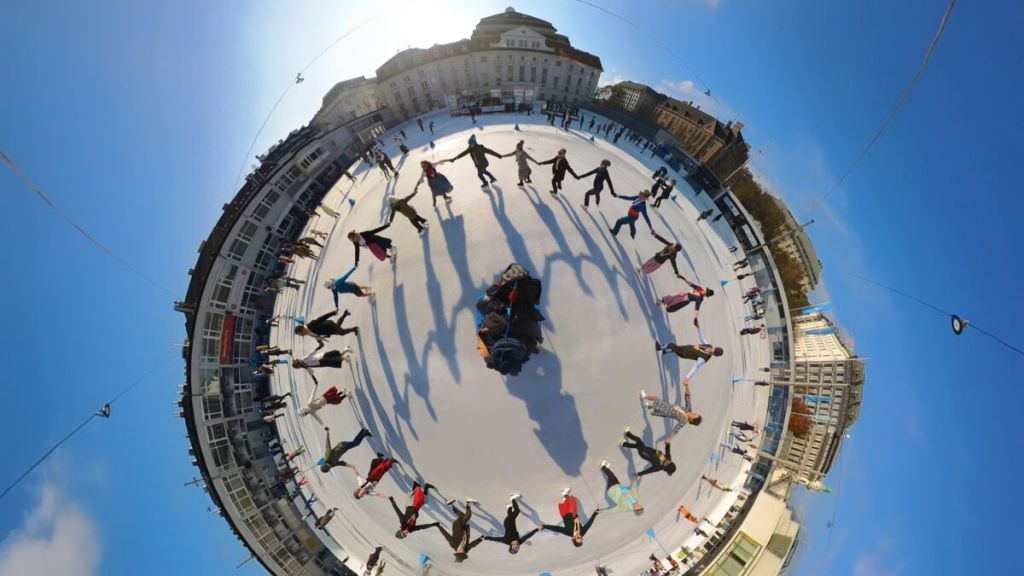
Some dances are for couples, others for groups of four or six or everyone joins by forming one large circle. You never have to sit out in want of a partner. It is called “circular” or “Rund” dancing because couples or groups move in a defined circle around a fixed centre point — usually a bench with coat hangers, where you can rest for a moment and leave your things.
Viennese Ice Dancing Tradition – A Bit of History
Ice dancing in Austria developed in the second half of the 19th century, parallel to the grand Viennese ball tradition. In the 1860s, the Viennese waltz and the enthusiasm for dancing experienced a particular boom with the compositions of Johann Strauss (son). At the same time, with the founding of the Vienna Skating Club (WEV) on 7 February 1867, ice skating became part of the city’s entertainment and leisure culture.
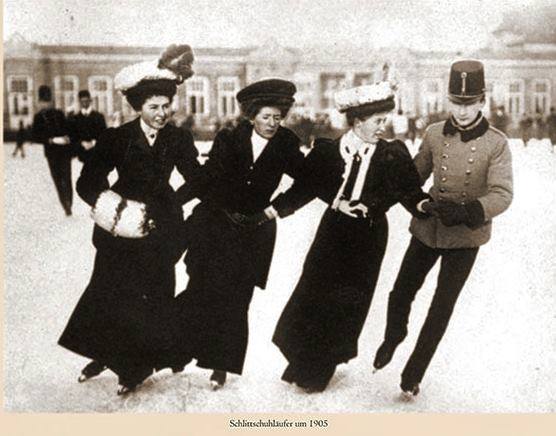
It was thanks to the American ballet dancer and figure skater Jackson Haines that dancing and ice skating merged into a unique Viennese ice-dancing tradition. In January 1868, he demonstrated how the waltz, polka, and mazurka could be translated onto the ice. While military bands played for entertainment, the more experienced skaters gathered in the centre of the rink for their first dances. Soon, festivals and events on the ice rivalled the splendour and popularity of the ballroom dances indoors.
Circular dancing on ice has preserved essential elements of 19th-century Viennese dance culture that have otherwise largely disappeared: the coexistence of couple and group dances, and dance games such as the “circle waltz”.
“Rundtanzen” Today – Our Favourite Part of the Year
The Vienna Skating Club holds “Rundtanz” sessions three times a week for a dedicated community of enthusiastic ice dancers. This large outside skating rink provides space and dance music just for us — something truly unique, I dare say, in the world. For many of us, Saturday and Sunday Rundtanzen are a fixed part of winter life — a cherished ritual that connects generations. Old and young dance together, just as our parents and grandparents once did.
Throughout the season, we celebrate traditional events that mark the rhythm of winter: the festive Season Opening with a live brass band, everyone dressed in traditional Austrian costumes („Kirtag“); New Year’s Day, when we dance to the music of the Vienna Philharmonic’s New Year’s Concert, broadcast live from the Musikverein; the Abendcorso in January with live band and refined attire; the joyful Carnival in February („Fasching“); and the End-of-Season Dance in March (“Kehraus”).
“Rundtanzen on ice in Vienna” has been added to the Austrian list of intangible cultural heritage by the Austrian UNESCO Commission. It is a special tradition that we hope to preserve for many generations to come.
Experience “Rundtanzen” Yourself
If this sounds like something you would like to see and try, why not join us this January for a weekend in Vienna? You can learn the basic steps of Rundtanzen in two workshops on Friday and then put your new skills to the test on Saturday and Sunday — and dance as much as you ever dreamed of. For more information, please see the announcement for the Historical Ice Dance Weekend in Vienna.
Happy skating and greetings from the Viennese adult ice dancers!
Sources and Foto Credit: Wiener Eislaufverein, Rundtanzen am Eis
 Ice Dance Events
Leave a comment